
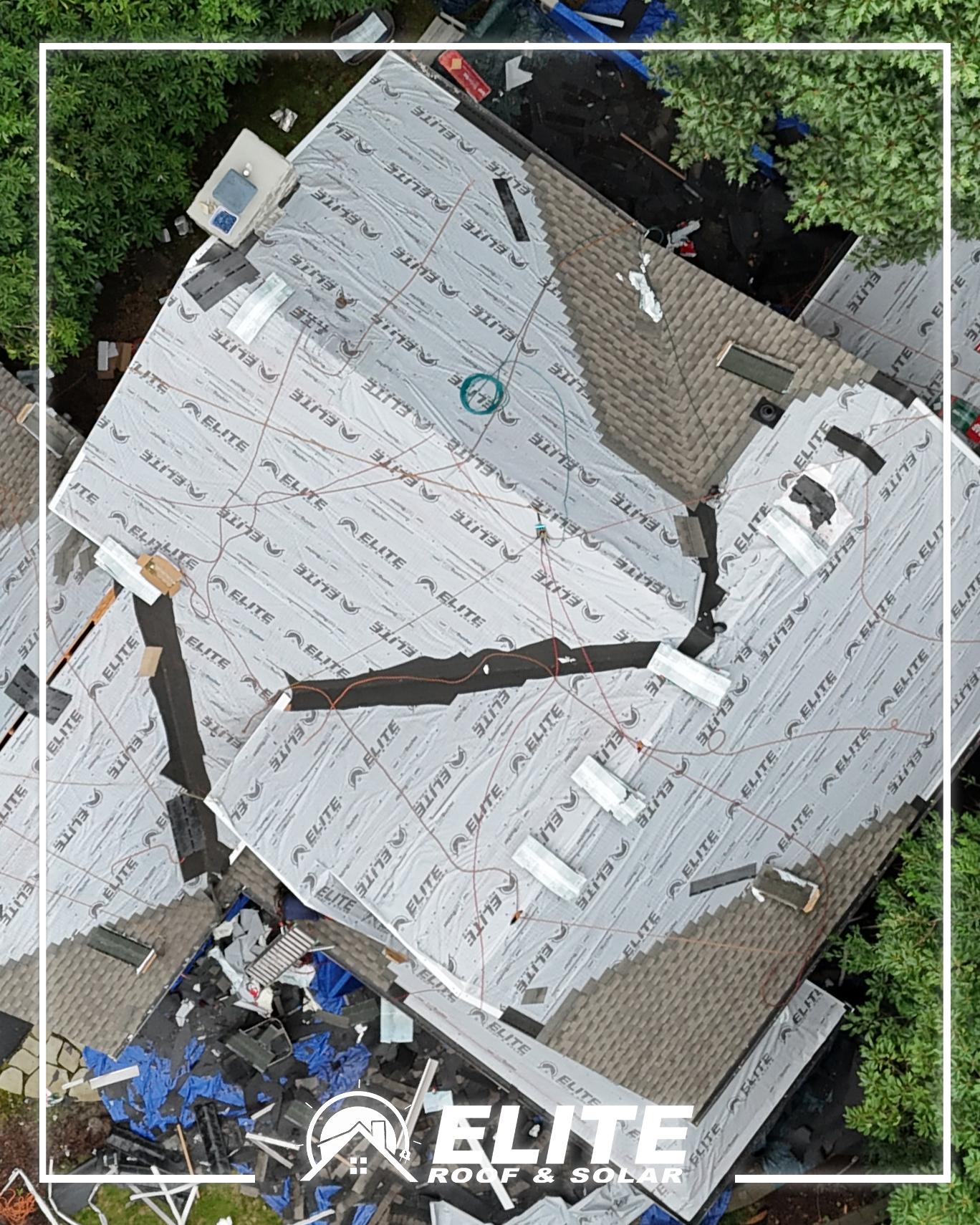
When homeowners ask about shingles, they’re asking about the visible layer. But what goes beneath the shingles — the roofing underlayment — is the secondary line of defense when shingles are compromised, and its quality affects moisture protection, installation performance, and long-term system performance in ways that matter more than most homeowners realize.
Understanding the three main underlayment categories and what distinguishes quality products within each helps you ask the right questions when reviewing contractor proposals.
Table of Contents
What Roofing Underlayment Does
Underlayment serves two purposes:
During installation: It protects the roof deck from weather exposure between when old materials are removed and when new shingles are installed. On a multi-day project or one that encounters unexpected weather, this protection is significant.
Long-term: It provides a secondary water barrier when shingles are damaged, displaced, or compromised. Ice dams, wind-driven rain, and late-life shingle deterioration all create conditions where the underlayment is the only barrier between water and the roof deck.
Most manufacturer warranty terms include specific underlayment requirements. Installing a non-compliant underlayment can void the manufacturer’s material warranty.
Felt Roofing Underlayment: When It Works and When It Doesn’t
Traditional felt underlayment comes in two weights: 15-lb and 30-lb. These numbers historically referred to the weight per square (100 square feet), though modern products often don’t match these weights precisely — the designations have become product category labels more than literal specifications.
15-lb felt: Lighter, less expensive, and more prone to tearing during installation. It can dry out and become brittle over time, particularly in hot climates or when exposed before shingle installation.
30-lb felt: Heavier, more durable, and more resistant to damage during installation. It provides better weather protection during installation windows.
Felt underlayment is still used, particularly in budget applications and by contractors who learned their trade before synthetic products became dominant. It remains code-compliant in most jurisdictions. However, it has been largely displaced in quality installations by synthetic products for good reasons.
Synthetic Underlayment
Synthetic underlayment is woven polypropylene or polyethylene material that has become the standard in quality residential roofing installations. Compared to felt:
Lighter: Synthetic underlayment is significantly lighter than 30-lb felt, which reduces physical strain on installers and reduces material delivery weight.
More tear-resistant: Synthetic underlayment resists installation tearing much more effectively than felt, particularly in cold temperatures where felt becomes brittle.
Better walkability: The surface texture of most synthetic underlayments provides more traction for crew walking the roof during installation.
Higher slip ratings: Many synthetic products have specific ratings for worker safety on pitched roofs.
Longer exposure tolerance: Synthetic underlayment can be left exposed (between installation stages or if a project is delayed) for significantly longer than felt without performance degradation. Felt left exposed deteriorates quickly in UV.
Most major manufacturer warranties now specify or recommend synthetic underlayment. GAF’s Timberline warranty specifications, for example, reference specific synthetic underlayment products for system warranty compliance.
Self-Adhering Membrane (Ice and Water Shield)
Ice and water shield is a peel-and-stick rubberized asphalt membrane that bonds directly to the roof deck. Unlike felt and synthetic underlayments, it creates a true waterproof barrier — not just water-resistant — and seals around nail penetrations.
This is the critical distinction: standard underlayments are water-resistant, meaning they redirect water but are not impervious to pooled or standing water. Ice and water shield is waterproof and resists water infiltration even when water stands on it, as occurs behind an ice dam.
Required applications:
- At eaves in cold-climate markets: most jurisdictions in climate zones where ice dams form require ice and water shield at the eave for a minimum distance (typically 2 to 6 feet from the eave depending on code)
- At valleys, which channel concentrated water flows
- Around all penetrations in premium installations
Appropriate applications (not required but recommended):
- At all valleys in warm climates where ice dams aren’t a concern
- In the field (full coverage) on low-slope roofs where standard drainage assumptions don’t apply
- Around all pipe penetrations for enhanced leak protection
What a Professional Proposal Should Specify
A professional roofing proposal doesn’t say “underlayment included.” It specifies:
- Underlayment type (synthetic or felt, specific manufacturer and product name)
- Ice and water shield locations (eave coverage, valley coverage, penetration coverage)
- Whether the product meets the requirements of the specific shingle manufacturer warranty being offered
If a proposal says “standard underlayment,” ask specifically what product is being installed and verify it meets the warranty requirements for the shingle product you’re receiving.
Related Reading: Shingle Roofs: Everything You Need to Know | GAF Roofing Warranty: What Homeowners Must Understand
External Resource: GAF — Roof Deck Protection and Underlayment