
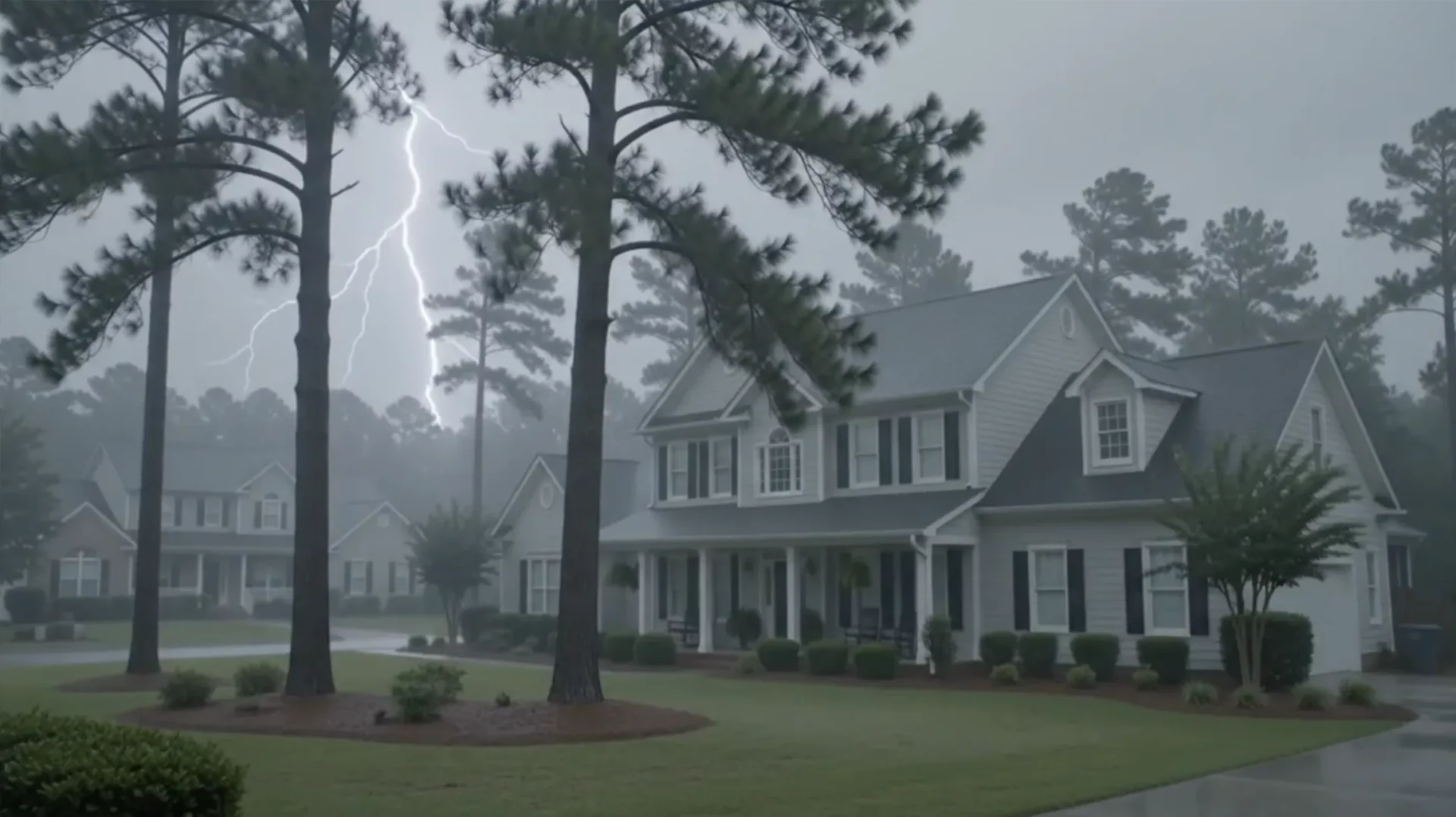
A severe weather event — high winds, hail, a fallen tree — can leave homeowners uncertain about what to do in the hours and days that follow. The instinct to act quickly is correct. But acting correctly matters just as much as acting quickly. The steps you take (and don’t take) in the immediate aftermath of storm damage to your roof will shape your insurance claim outcome, your contractor selection process, and the quality of the repair or replacement you receive.
First 24 Hours After Storm Damage: What to Do Before Anything Else
The most important thing you can do immediately after a storm is document the damage before anything changes. Insurance claims are supported by evidence, and evidence deteriorates rapidly — debris gets cleaned up, temporary repairs change the condition, and the distinction between pre-storm and post-storm damage conditions becomes harder to establish.
Photograph everything. Use your phone to photograph any visible roof damage from the ground, any interior water damage (ceiling stains, damaged walls, wet insulation), debris on the property, and any damage to gutters, fascia, or adjacent structures. Note the date and time stamps in your camera roll.
Don’t go on the roof yourself. A storm-damaged roof may have compromised structural elements that are not visible from below. Inspecting your own roof immediately after a severe weather event is dangerous. Leave the roof inspection to licensed contractors.
Make interior temporary repairs as needed. If water is actively entering the home, placing buckets, moving furniture, and covering vulnerable areas with plastic sheeting is appropriate and necessary. Document these measures. Temporary interior mitigation does not affect your insurance claim rights — insurance policies require you to take reasonable steps to prevent further damage.
Contact your insurance company. Call your insurer within 24 to 48 hours to report potential storm damage and open a claim. You are not committing to a specific scope of repair by making this call — you are beginning the documentation process that protects your coverage rights. Most policies have notification requirements, and late notification can complicate claims.
Getting a Professional Damage Assessment
Before the insurance adjuster visits your property, get a professional storm damage assessment from a licensed roofing contractor.
This is important for several reasons. Insurance adjusters assess many properties quickly and may not document all damage thoroughly. A contractor who has inspected your specific damage in detail can provide documentation that supports a complete claim rather than one limited to what the adjuster observed on a brief visit.
A professional damage assessment should include:
- Written documentation of all observed damage with specific locations
- Photographs taken from the roof surface (not just ground level)
- An estimate for repair or replacement
- Identification of damage that may not be visible from ground level (impacts on pipe boots, flashing deformation, substrate damage from hail)
You are not obligated to hire the contractor who assesses the damage. Getting an assessment from a contractor you’ve independently evaluated is appropriate. Getting an assessment from a contractor who showed up at your door unsolicited immediately after the storm requires more caution — though many such contractors are legitimate, the circumstances favor aggressive or opportunistic behavior.
Navigating the Insurance Claim Process
Understanding Your Policy Terms
Before the adjuster arrives, review your homeowner’s policy for:
Coverage type (RCV vs. ACV). Replacement Cost Value (RCV) coverage pays the cost to replace your roof with new materials, minus your deductible. Actual Cash Value (ACV) coverage pays the replacement cost minus depreciation — which on an older roof can result in a significantly reduced payment. Many older policies have shifted to ACV for roofs over a certain age.
Deductible structure. Many policies have separate, higher deductibles for wind and hail damage — often expressed as a percentage of insured value rather than a flat amount. A 1% wind/hail deductible on a $400,000 home is $4,000, regardless of what your standard deductible says.
Exclusions. Most policies exclude damage caused by wear, tear, or lack of maintenance. If your roof is old and deteriorated, some of the damage observed after a storm may be attributed to pre-existing conditions rather than the storm event, which affects claim scope.
When the Adjuster Visits
Be present during the adjuster’s inspection if at all possible. Having a contractor present during the adjuster visit — someone who has already inspected the roof and documented the damage — is helpful. They can point to specific damage areas and ensure the adjuster documents everything that is legitimately attributable to the storm event.
If the adjuster’s damage estimate seems incomplete or the settlement offer seems inadequate based on your contractor’s assessment, you can contest the outcome. Your policy likely includes an appraisal process or a formal dispute mechanism. Public adjusters — licensed professionals who work on your behalf rather than the insurer’s — can also be engaged if you believe the claim settlement is inadequate.
The Supplement Process
If additional damage is discovered during the actual repair or replacement — decking that is more compromised than initially visible, flashing conditions that require more extensive replacement — your contractor can submit a supplement to the insurance claim for the additional scope. This is a normal part of the claims process, not an unusual situation.
Avoiding Storm Chasing Contractors
Following significant storm events, contractors from other markets descend on affected areas. Some are legitimate, experienced roofers temporarily expanding their geographic reach to meet elevated demand. Others are transient operators who collect deposits and disappear, perform substandard work with no intention of providing warranty service, or engage in insurance fraud.
The verification process that applies to all roofing contractor selection applies with greater importance after storm events:
- Verify licensing on the state board’s website — not from a business card
- Require a current Certificate of Insurance before any conversation about price
- Research the company’s history — how long have they been in business under this name, in what market?
- Ask for local references, not just from the storm event but from prior work in their home market
- Never pay more than a reasonable deposit before work begins
Be particularly cautious of contractors who specifically offer to “handle the insurance process” in ways that involve waiving your deductible (fraud), inflating the claim scope beyond actual damage (fraud), or demanding that you sign over claim assignment rights (Assignment of Benefits agreements that can complicate your ability to manage the claim yourself).
Temporary Roof Repairs After Storm Damage
If your roof has sustained significant damage, temporary repairs to prevent additional water intrusion while the permanent repair or replacement is scheduled are appropriate and often necessary.
Legitimate temporary repairs include:
- Tarping over damaged areas (properly secured, not just draped)
- Covering exposed decking in areas where shingles or panels have been removed by the storm
- Sealing active leak points temporarily with appropriate roofing sealant
Temporary repairs should be documented — photographed before and after — and should not disturb damage evidence before your adjuster has had the opportunity to inspect. Discuss the scope of any temporary repair with your insurance carrier before proceeding if the adjuster hasn’t yet visited.
After the Repair: What to Confirm Before Final Payment
Before making final payment to any contractor for storm damage repair or replacement, confirm:
- All damaged areas identified in the claim scope have been addressed
- Materials installed match those specified in the contract
- Cleanup is complete, including magnetic nail sweep
- Permit inspection (if applicable) has been passed and documented
- Warranty documentation (both manufacturer and labor) has been provided
Related Reading: Roof Repairs: Costs, Timing, and What to Expect | How to Find Legitimate Roof Repair Contractors
External Resource: Insurance Information Institute — Filing a Home Insurance Claim